
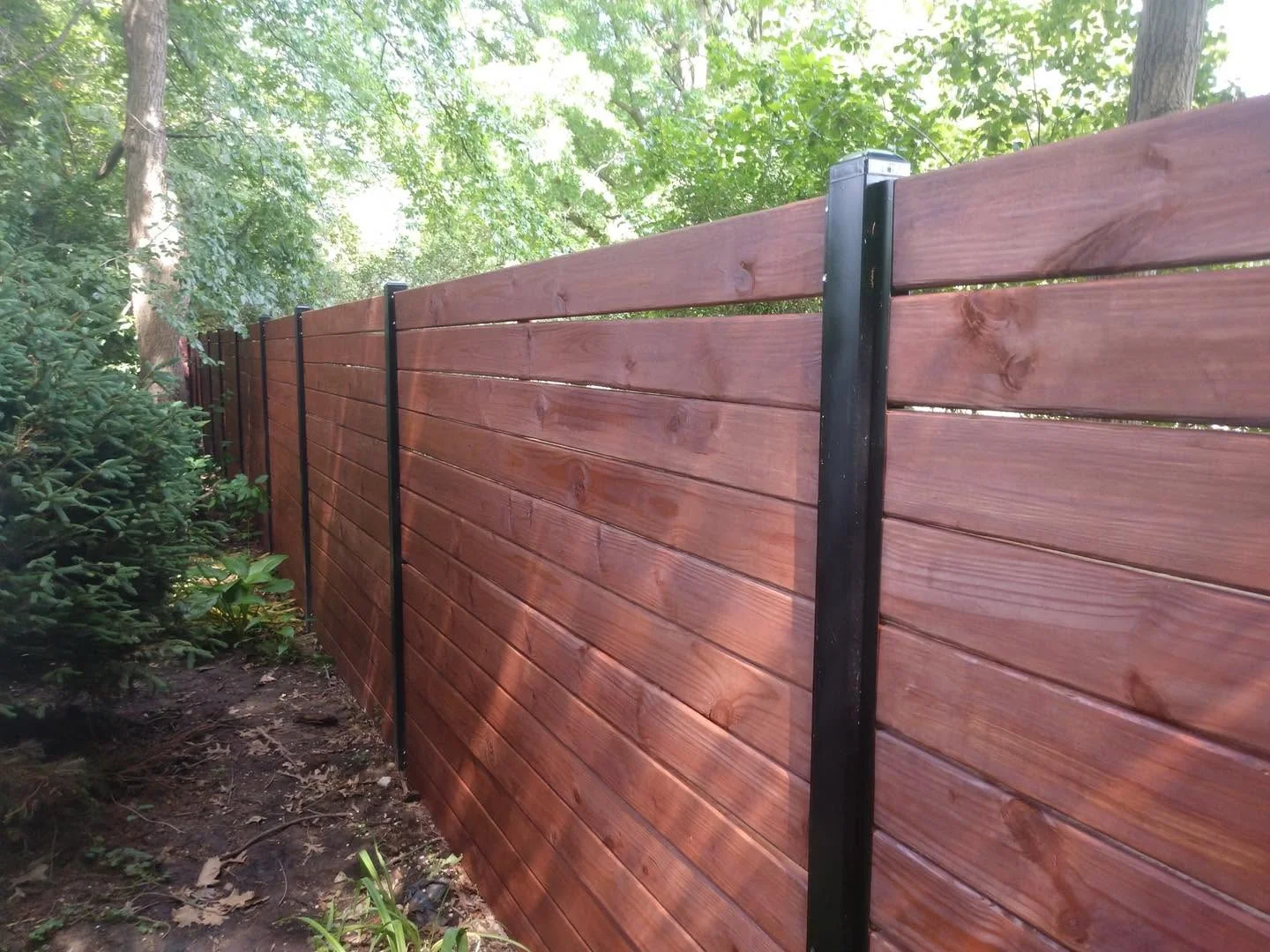
The surface decides
Four questions shape a responsible specification.
Deck boards take traffic and horizontal exposure; fence boards meet sun, shade, and moisture differently. Those conditions are not interchangeable.
- Wood condition
- Soundness, wear, checking, rough fibers, and damaged areas
- Existing finish
- Bare, weathered, previously stained, painted, or partly failing
- Exposure
- Horizontal or vertical surface, shade, sun, moisture, and traffic
- Appearance
- Visible grain, more uniform color, and the desired opacity
Color and opacity
Decide how much wood should remain visible.
More transparency retains visible grain and variation. More opacity creates a more uniform field of color. Neither suits every surface.
Existing coating, wood variation, exposure, color change, and compatible product requirements belong in one decision. The estimate turns that direction into a project specification.
A condition-led sequence
Preparation precedes color.
The sequence is adjusted to the wood, existing finish, exposure, and agreed scope for the project.
Review
Identify the wood, existing finish, wear, access, and areas that need another remedy first.
Clean
Choose cleaning around the contamination and finish actually present, then allow suitable drying.
Prepare
Address loose finish, rough transitions, and other visible conditions that affect the coating path.
Protect
Define adjacent siding, masonry, planting, hardware, and other nearby surfaces before application.
Specify
Coordinate color, opacity, existing finish, exposure, and product requirements for the approved surface.
Apply & review
Work within suitable surface and weather conditions, then review the agreed deck or fence areas.
Before and after · August 2026
Weathered boards to a deep, even-toned finish.
Matching architecture shows the same porch floor and railing before and after a rich dark stain was applied.


Weather and drying
Northeast Ohio conditions belong in the plan.
Surface dryness, temperature, humidity, rain, dew, shade, direct sun, wind, and coating requirements affect when work proceeds and when the area can return to use.
Maintenance factors
Inspect exposure, wear, and drainage over time.
Horizontal traffic areas often weather differently from vertical fence boards. Inspection can identify wear, organic buildup, drainage concerns, or localized finish change without promising a fixed coating life.
Planning questions
Deck & Fence Staining FAQs
When is deck or fence staining appropriate?
Staining may be appropriate when the wood and assembly remain suitable and the existing finish can support a sound preparation and coating path. Damage, movement, decay, or another unresolved condition may need separate evaluation first.
How do you prepare exterior wood before staining?
Preparation depends on the wood, contamination, weathering, and any prior coating. The estimate may identify cleaning, drying, loose-finish removal, surface refinement, masking, and other condition-specific steps rather than one universal checklist.
How should I choose stain color and opacity?
Begin with the existing finish, the condition and variation of the wood, exposure, and the look you want. A more transparent direction shows more grain; a more opaque direction creates more uniform color. Suitability still depends on the approved coating system.
Can a new stain simply cover an old coating?
Not automatically. The existing material, adhesion, wear, color, and compatibility need to be understood. A failing or incompatible finish cannot be treated as a sound foundation just because a new color is darker.
How does weather affect scheduling and drying?
Surface dryness, air and surface temperature, humidity, sun, wind, rain, dew, shade, and the selected coating requirements all matter. Application and drying guidance should therefore be set for the actual project conditions.
How long will deck or fence stain last?
There is no responsible fixed lifespan for every exterior wood surface. Exposure, traffic, drainage, wood condition, preparation, prior coatings, color or opacity, application, and ongoing maintenance all influence when attention is needed again.
Does this service include deck or fence repair?
The service focuses on staining rather than structural or general carpentry work. Loose boards, unsafe assemblies, decay, or other repair needs should be evaluated and corrected by the appropriate qualified provider before coating when required.