
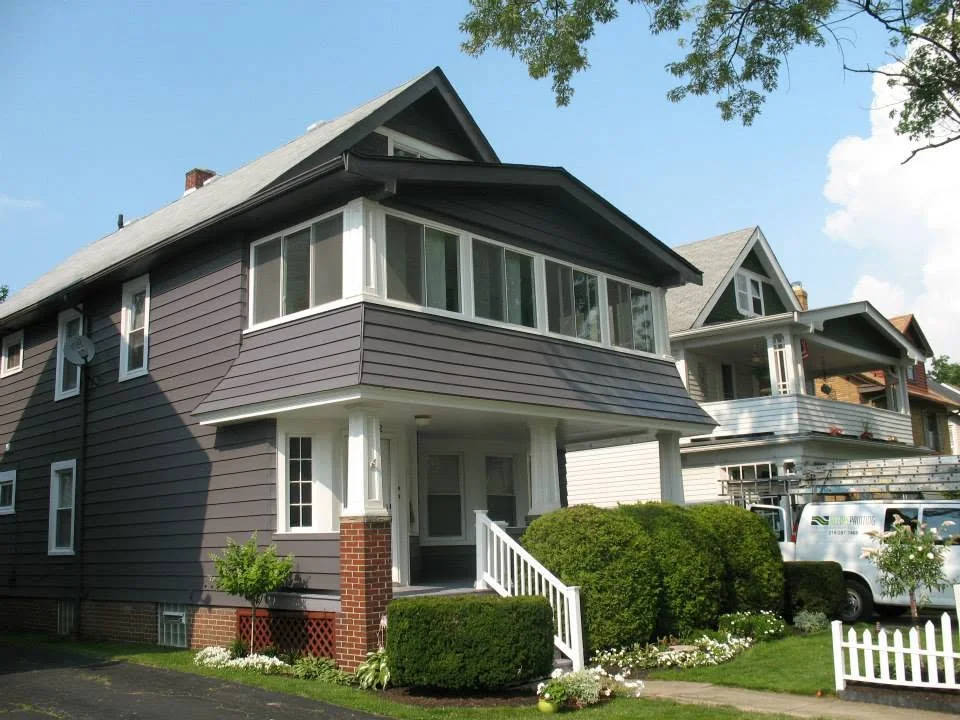

Material before marketing
Aluminum and vinyl ask different questions.
Aluminum siding
Look for oxidation, chalking, corrosion, dents, exposed metal, and the soundness of any factory or previous finish. Cleaning, adhesion, and primer decisions follow that condition rather than a universal formula.
Vinyl siding
Check installation, movement, brittleness, deformation, prior coatings, and color limits. Because darker colors absorb more heat, the vinyl, manufacturer guidance, color, and coating must be evaluated together.
The suitability review
Six conditions guide the decision.
Fading alone is different from a failing surface. The estimate should distinguish appearance from conditions that affect adhesion, movement, or the siding assembly.
- Oxidation
- Extent and exposed-metal condition
- Chalking
- Residue and finish soundness
- Fading
- Existing color and exposure
- Previous coatings
- Compatibility and failure
- Damage
- Dents, cracks, looseness, or deformation
- Adhesion
- Whether a sound coating path exists
A condition-led sequence
Preparation carries the finish.
Cleaning, repairs, masking, primer or coating selection, application, and review are scoped to the approved material. Not every surface receives every step.
Inspect
Identify material, finish, damage, movement, and adhesion concerns.
Clean
Remove contamination that would interfere with adhesion.
Resolve repairs
Separate coating work from loose, damaged, or moisture-related conditions.
Mask
Define siding, trim, openings, fixtures, and nearby areas.
Specify
Match primer, coating, color, and application to the substrate.
Apply
Work within the established surface, weather, and coating conditions.
Review
Check the agreed surfaces, color direction, and visible finish.
Exact pair 02
A lighter color change, shown side by side.
Matching architecture shows the same gabled home before refinishing and after the completed lighter finish.


Color is a technical decision
The dramatic option is not always the suitable option.
Aluminum may offer broad color possibilities when its condition supports them. Vinyl requires an additional heat and movement review. A darker selection can increase heat absorption, so color cannot be separated from coating requirements and manufacturer guidance.
A dramatic transformation can show what refinishing looks like, but the right color shift still depends on the siding, existing condition, coating requirements, and manufacturer guidance.
Refinish, repair, or replace?
Choose from condition, not a blanket sales percentage.
Consider refinishing
When the siding remains suitable and the finish is the principal concern.
Resolve repairs first
When localized damage, looseness, or adjacent conditions need a separate answer.
Consider replacement
When damage, deformation, assembly concerns, or coating failure make refinishing unsuitable.
Before & after · project 03
A light-to-olive exterior shift.
Two matched views show the same two-story property before work and after an olive-toned finish with dark shutters and retained masonry.
- Project gallery date
- May 2014
- Starting point
- Light exterior siding
- Completed finish
- Olive tone with dark shutters


Questions before refinishing
Understand the limits before choosing the finish.
Need an answer about a specific surface? Call (216) 287-7468.
Can every aluminum or vinyl siding surface be refinished?
No. Material, installation, damage, deformation, oxidation, chalking, prior coatings, and adhesion affect suitability. An estimate is an assessment, not an automatic recommendation to paint.
When might replacement or repair be the better first step?
Loose panels, deformation, damage, moisture concerns, or an unsuitable failing coating may need another remedy first. The appropriate path depends on inspection.
What do chalking and oxidation mean for aluminum siding?
They are conditions that cleaning alone may not resolve. Their extent, the soundness of the existing finish, and exposed or corroded areas need evaluation.
Can vinyl siding be changed to a darker color?
Sometimes, but not without limits. Darker colors absorb more heat, so the vinyl, manufacturer guidance, color, and compatible coating requirements must be considered together.
How is siding prepared before refinishing?
Preparation may include cleaning, repair decisions, masking, and a substrate-compatible primer or coating when the selected system calls for it. Projects differ by condition.
How long will a refinished siding surface last?
There is no responsible fixed lifespan without the actual surface and specification. Condition, preparation, adhesion, exposure, color, movement, compatibility, and maintenance influence performance.
What should I send for an estimate?
Share the material if known, areas involved, fading or damage, prior coating, color direction, and clear photos. An on-site review may still be needed.
Is the siding a candidate?